

DIN/DKE SPEC on the digital product passport for batteries
 © VectorMine – stock.adobe.com
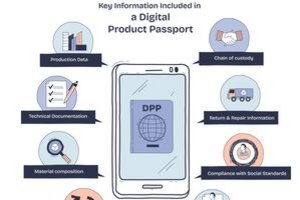
Some of the data attributes are also important from a product safety perspective and for parties concerned with occupational safety and health. The digital product passport for batteries provides swift access to information on the manufacturer and the basic technical data of the battery, such as its capacity, voltage, usable energy, power capability, expected lifetime etc. Beyond this, it is a means for communicating detailed information on the elements (including hazardous substances) of which the battery is comprised, and on its disassembly, including the associated safety information, to affected parties. The document highlights the potential offered by digital product passports, which are set to become mandatory in the future for a wide range of products. This presents advantages for the occupational safety and health community, which can exploit this potential for other products used in the workplace. In KAN’s view, this should, however, be achieved in normal standards committees, rather than by means of documents such as DIN/DKE SPECs or CEN/CLC CWAs, which are developed rapidly in ad hoc consortia.