

Workplace climate
Standardization on the subject of "climate" affects occupational health and safety when, for example, it deals with the exposure of the worker to cold or warm ambient conditions. Measuring methods, terminology or ranges which can be endured are specified, and exposure times and rest periods proposed. KAN monitors this field of standardization to ensure that no regulations on occupational medical care or on the stipulation of recovery periods are included in standards, since these are the responsibility of the individual Member States.
Climate change and occupational safety and health
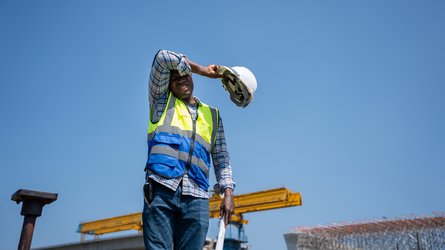
The growing pace of climate change, and its far-reaching impacts, presents new challenges for occupational safety and health. However, familiar topics such as protection against hazardous substances become even more relevant as a result of measures taken in response to climate change, such as the renovation of buildings. Gearing occupational safety and health activity to the numerous challenging issues ranging, for example, from hot work to insulating materials, or from UV radiation to the handling of refrigerants from heat pumps, is essential if the potentially hazardous consequences of climate change for workers are to be tackled.
Standardization has a major role to play in this process. Work is being conducted intensively on technical standards in areas such as photovoltaics, electromobility and the sustainability of buildings. At the same time, standards addressing adaptation to the climate, risk assessment, up to and including management systems in these areas, already exist and are the subject of further development. KAN raises awareness of the issue among its stakeholders and other parties and advocates for occupational safety and health to be given adequate consideration in the process.
Dr. Anna Dammann
dammann@kan.de
KANBrief articles on the subject
- KANBrief 1/24: Klimawandel und Arbeitsschutz